Science is not our marketing. It is our origin.

Asymetree was born at the CSIC Institute for Sustainable Agriculture. Every irrigation recommendation SAQIA gives rests on published, peer-reviewed research — and here you can check it.

From a research group to your farm

Asymetree is a spin-off of the Institute for Sustainable Agriculture (IAS-CSIC) in Córdoba, Spain. Our origin is the institute’s Agronomy group, which has spent decades studying water–plant relations in Mediterranean tree crops: how much water an olive or almond tree really needs, at which moments of the season a deficit costs yield, and at which it is tolerated without penalty.

That knowledge — crop coefficients, stress thresholds, deficit irrigation strategies — lived in scientific papers and field trials. SAQIA is the way to bring it to the farm: the same methods, applied to your trees, with your data.

The three scientific pillars

Thermal remote sensing of water stress with drones

A tree that transpires well cools itself; one that is thirsty heats up. Our team pioneered measuring that phenomenon from drones with thermal cameras and turning it into an operational index, the CWSI, which detects water stress tree by tree before it becomes visible.

Phenotyping and structural characterization with LiDAR

Canopy volume determines how much water each tree demands. With LiDAR, the structure of the whole orchard — height, canopy, missing trees, topography — is measured in one morning with centimetre precision. It is the baseline against which any improvement is documented.

Olive irrigation scheduling: the IAS methodology

Specific crop coefficients and regulated deficit irrigation: applying the deficit in the phenological windows where the tree tolerates it and irrigating in those where it doesn’t. Decades of IAS-CSIC trials in olive and almond underpin the judgement with which SAQIA calculates every irrigation plan.

Publications

A selection of the work by our team and the IAS-CSIC group that SAQIA builds on. All linked to the original publication.

  • LiDAR-based assessment of canopy size variability and its impact on irrigation efficiency and yield in almond orchards

    Open Access

    Rafael Orozco-Moran · Jose A. Jimenez-Berni · Elias Fereres · Francisco Orgaz

    Scientia Horticulturae, 2026, 357, 114652

    Quantifies the impact of tree structural heterogeneity, estimated from LiDAR-derived ground cover, on water–yield relationships in a commercial almond orchard. Conventional irrigation management ignores tree-size variability within management units, leading to inefficient water use.

    doi.org/10.1016/j.scienta.2026.114652
  • Irrigation scheduling of an almond orchard using the water balance and remote and proximal sensing

    Rafael Orozco-Moran · Jose A. Jimenez-Berni · Elias Fereres · Francisco Orgaz

    Agricultural Water Management, 2025, 313, 109455

    Almond irrigation scheduling methodology integrating the water balance with remote and proximal sensing for individualized crop coefficient (Kc) estimation. Characterizing each tree with LiDAR and multispectral sensors allows irrigation doses to match the orchard’s real heterogeneity.

    doi.org/10.1016/J.AGWAT.2025.109455
  • High throughput determination of plant height, crown cover, and above-ground biomass in wheat with LiDAR

    Open Access

    Jose A. Jimenez-Berni · D.M. Deery · P. Rozas-Larraondo · A.T.G. Condon · G.J. Rebetzke · R.A. James · W.D. Bovill · R.T. Furbank · X.R.R. Sirault

    Frontiers in Plant Science, 2018, 9, 237

    High-throughput phenotyping methodology using ground-based LiDAR to automatically determine plant height, crown cover and above-ground biomass under field conditions, directly applicable to structural crop characterization.

    doi.org/10.3389/fpls.2018.00237
  • Water requirements of mature almond trees in response to atmospheric demand

    M. López-López · M. Espadafor · L. Testi · I.J. Lorite · Francisco Orgaz · Elias Fereres

    Irrigation Science, 2018, 36 (4–5)

    Characterizes water requirements of mature almond trees under varying atmospheric demand in Mediterranean conditions, providing specific crop coefficients that underpin more efficient irrigation scheduling.

    doi.org/10.1007/s00271-018-0582-2
  • Long-term almond yield response to deficit irrigation

    D. Moldero · Á. López-Bernal · L. Testi · I.J. Lorite · Elias Fereres · Francisco Orgaz

    Irrigation Science, 2021, 39 (4)

    Multi-season analysis of deficit irrigation effects on almond yield. Identifies water-reduction thresholds that optimize marginal productivity and the crop’s economic sustainability under scarcity.

    doi.org/10.1007/s00271-021-00720-8
  • Thermal and Narrowband Multispectral Remote Sensing for Vegetation Monitoring from an Unmanned Aerial Vehicle

    J.A.J. Berni · P.J. Zarco-Tejada · L. Suárez · Elias Fereres

    IEEE Transactions on Geoscience and Remote Sensing, 2009, 47 (3), 722–738

    First operational thermal and multispectral drone-based remote sensing system for monitoring vegetation water and nutritional status at individual-tree scale. An international reference work in drone-based agricultural remote sensing.

    doi.org/10.1109/TGRS.2008.2010457
  • Mapping Canopy Conductance and CWSI in Olive Orchards Using High Resolution Thermal Remote Sensing Imagery

    J.A.J. Berni · P.J. Zarco-Tejada · G. Sepulcre-Cantó · Elias Fereres · F. Villalobos

    Remote Sensing of Environment, 2009, 113 (11), 2380–2388

    Methodology for mapping canopy conductance and the Crop Water Stress Index (CWSI) in olive orchards using high-resolution thermal imagery. Establishes the feasibility of detecting water stress tree by tree — the basis of differentiated irrigation management in woody crops.

    doi.org/10.1016/j.rse.2009.06.018

The team

Technical visits, irrigation plans and end-of-season reviews are signed by people with a name, a face and a verifiable scientific track record.

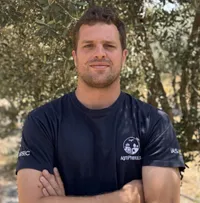
Rafael Orozco Morán

Rafael Orozco Morán

Co-founder · Precision agronomy

Specialist in precision management of woody crops. Has developed and validated LiDAR structural characterization methodologies and plant-sensor-based irrigation scheduling in commercial almond and olive orchards.
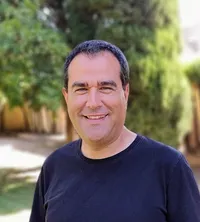
José A. Jiménez Berni

José A. Jiménez Berni

Co-founder · Sensors & remote sensing

Expert in drone remote sensing and proximity sensors for crop status diagnosis. Pioneer in the operational use of drone-mounted thermal cameras for agriculture.
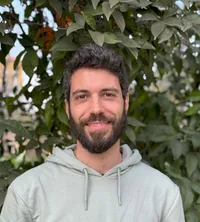
Gabriel Soriano Gayarre

Gabriel Soriano Gayarre

Co-founder · Hardware & sensor engineering

Industrial engineer responsible for the design and manufacturing of the plant sensors and the field communications network. Integrates hardware, firmware and LoRaWAN systems for on-farm deployments.
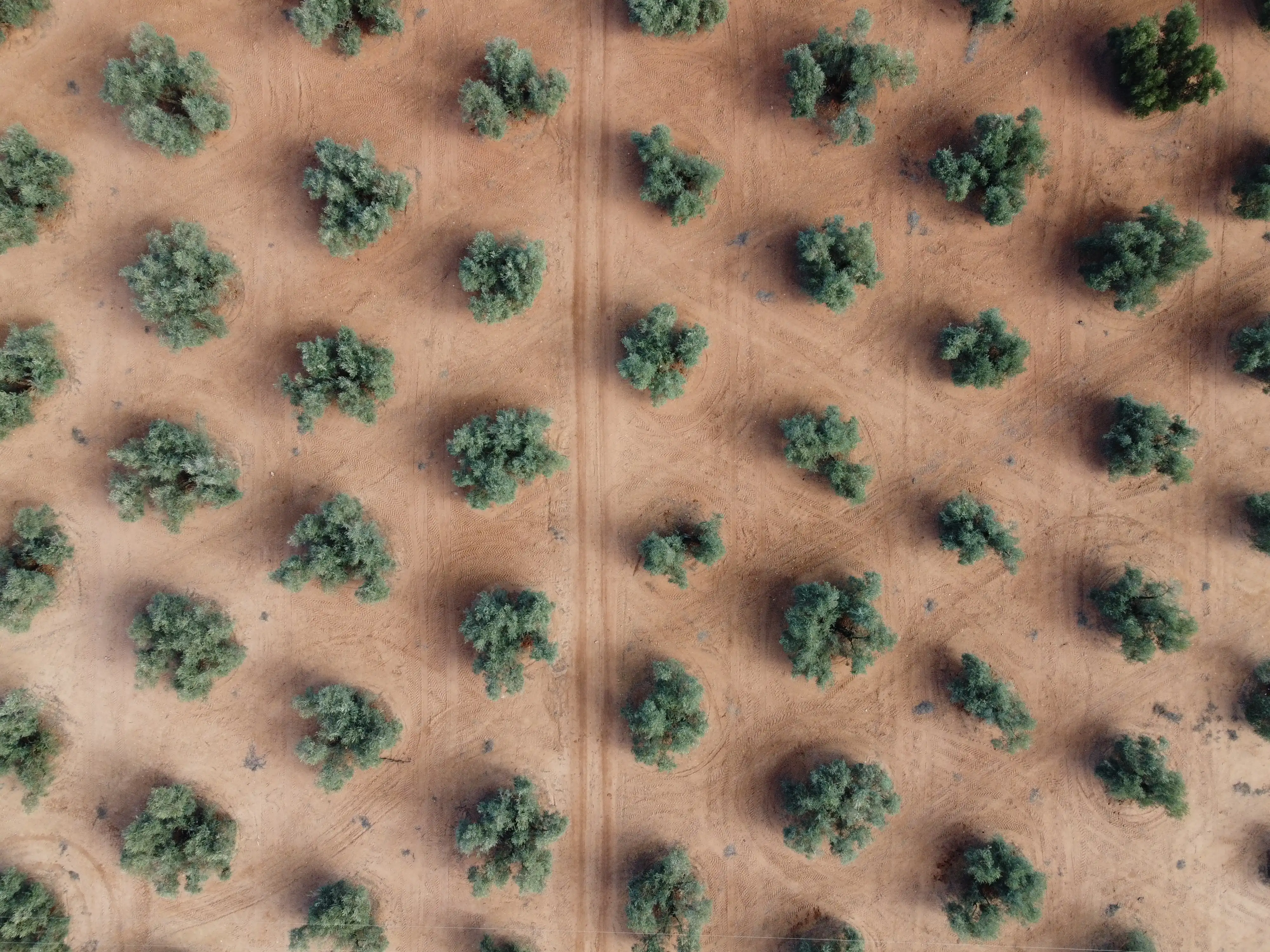
«When SAQIA recommends an irrigation, there is no black box behind it: there is published scientific literature and years of fieldwork.»

Want this judgement on your farm?

Tell us your crop, your area and how you irrigate today. We reply within 48 working hours.